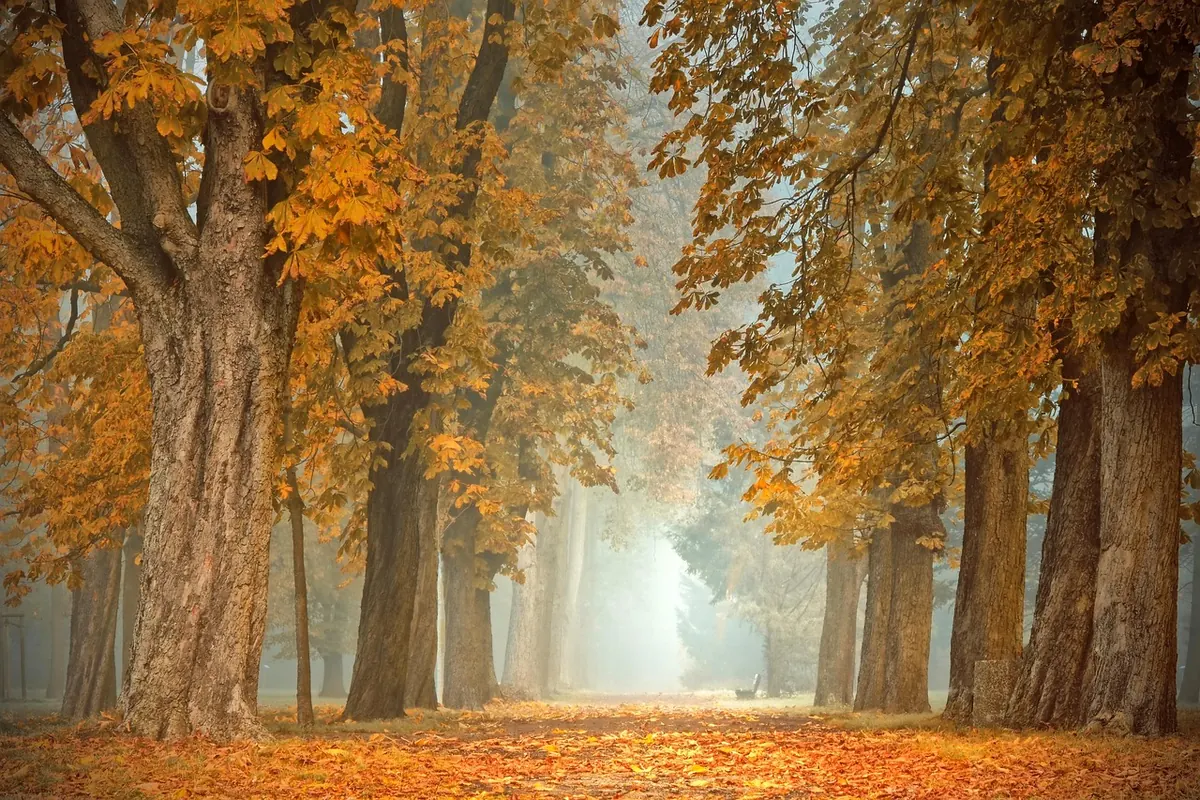
Every autumn, the same ridge can look like two different places. One year the maples burn orange and scarlet against a hard blue sky, the oaks hold deep russet, and the whole hillside seems lit from inside at four in the afternoon. Another year the leaves go from green to beige in what feels like a single night, hang there limp for a week, and drop. The trees didn't change. The weather did.
Fall color is a short performance, and September plus the first half of October decide how well it goes. Knowing what the trees are actually doing — and what helps or hurts them — turns a vague hope for "a good year" into something you can watch for, week by week, from your own porch.
The Chemistry Behind the Color
All summer, a leaf is a small solar factory running on chlorophyll, the green pigment that captures light and powers growth. Chlorophyll is unstable and expensive to maintain, so when days shorten and nights cool, the tree stops investing in it. A layer of corky cells forms at the base of each leaf stem and gradually cuts off the flow of water and nutrients. The leaf is being retired.
As chlorophyll fades, pigments that were hidden underneath become visible. Carotenoids produce the yellows and golds of birches, hickories and tulip poplars, and the oranges of sugar maples. They're present in the leaf all season, which is why yellow tends to be reliable no matter what the weather does. Anthocyanins — the reds and purples of red maple, sumac and sweetgum — are different. They're manufactured fresh in autumn from sugars still trapped in the leaf, and they develop best when those sugars are plentiful and the leaf is exposed to bright light. Tannins left behind in oaks and beeches give the browns. So the palette is partly fixed by species, and partly written by the forecast.
Three Weather Windows That Matter Most
Summer: enough rain, not too much
Soil moisture during July and August sets the foundation. Trees that go into autumn with a healthy, well-watered canopy have more to work with. A moderate dry spell can be harmless; a severe one is not. Prolonged drought stresses trees enough that they shut down early, and the result is often color that arrives weeks ahead of schedule and skews brown rather than red.
September: sunny days, cool nights
This is the stretch that decides whether you get a memorable year or a mediocre one. Bright, clear days keep photosynthesis ticking and sugars moving. Cool nights — generally in the forties — slow the movement of those sugars out of the leaf and encourage anthocyanin production. That day-night contrast is why the best foliage years often follow a string of crisp, cloudless September weather. Warm, humid, overcast nights work against you: sugars move out, reds stay muted, and everything drifts toward a dull yellow-brown.
Early October: cold enough, but not too cold
A light frost can intensify reds by finishing off the last of the chlorophyll. A hard freeze, roughly the mid-twenties Fahrenheit and below, does the opposite. It damages the leaf tissue, and instead of a slow, glowing fade you get browning, curling and a fast drop. The difference between a gorgeous year and a truncated one can be a single cold night.
Soil Moisture: The Quiet Variable
It's easy to forget what's happening underground, but moisture is the thread running through all of this. Wet soil keeps leaves hydrated and functioning, which supports a long, gradual color change. Dry soil pushes trees to protect themselves by cutting leaves loose early. Interesting middle ground: a modest dry spell in late summer, followed by normal autumn rain, often produces good color, because the tree isn't drowning but also isn't panicking.
Too much rain in October is its own problem. Persistent wet, windy weather can knock leaves down before they finish turning, and heavy cloud cover reduces the light that red pigments need.
What a Great Foliage Year Looks Like
Put the pieces together and the recipe is fairly clear:
- A growing season with adequate, steady rainfall and no severe summer drought.
- Sunny September days with lots of light reaching the canopy.
- Nighttime temperatures dropping into the forties, but staying above freezing.
- A gradual cooling trend rather than a sudden plunge.
- No hard freeze until most leaves have already turned.
- Calm weather in October, so leaves stay on the branches long enough to be seen.
Miss one or two of these and you usually still get a decent show. Miss the night temperatures and the moisture together, and you get the beige year.
How to Read the Season Where You Live
General forecasts are useful, but your neighborhood has its own timing. A few habits make you a better judge of it than any map.
- Follow local overnight lows more closely than daytime highs in late September. The night temperatures are doing most of the work.
- Note your elevation and slope direction. Higher ground and north-facing slopes turn earlier and often hold color longer. South-facing slopes warm fast and can finish quickly.
- Learn a few indicator trees near you — one sugar maple, one oak, one birch. Watching the same three trees each week tells you more than scanning a whole hillside.
- Check soil moisture before you blame the trees. If the ground is powder-dry a few inches down in August, expect an early, browner season.
- Go out often. Peak color in a mixed forest lasts a week or two at most, and it travels downslope and southward as the season progresses.
Enjoying Whatever This Year Brings
Not every autumn is a banner year, and that's part of the appeal. A muted season still gives you the smell of wet leaves, the first wood smoke, and the particular quiet of a forest thinning out. If the forecast looks promising, plan your walks for the week after the first good cold snap, and bring a camera with the sun behind you. If it looks poor, aim lower and earlier: seek out sheltered valleys, stream corridors and stands of birch or hickory, where yellows hold up regardless of what the weather did. The trees are running their own long experiment with light, water and cold. Your job is simply to show up and watch.
Photo: Peggychoucair / Pixabay