A healthy forest announces itself quietly. Not in one grand tree, but in small redundancies: a log soft with rot, a warbler moving through the midstory, a patch of moss on the north side of a trunk. If you know what to look for, a walk becomes a rough audit. This checklist is designed for a half-day wander, not a scientific survey. Use it to notice patterns, compare one stand to another, and track changes over years. Count what you find, but pay more attention to how the pieces fit together.
A Forest Is More Than Trees
A stand of straight trunks can look impressive and still be poor habitat. Forest health is about function: energy cycling, water absorption, seed dispersal, decomposition. The signs below often cluster. Where deadwood is abundant, insects and fungi follow. Where understory is diverse, birds and pollinators have options. Absence matters too. A tidy forest with little decay is often a simplified one.
The 15-Point Field Checklist
Walk slowly. Stop every hundred paces or so. Use all your senses: smell the humus, listen for chip notes, look up and down. Score each sign as absent, present, or abundant. You do not need to find all 15 in one outing.
- Standing dead trees, or snags. At least a few snags, ideally of different sizes and decay stages. They are apartments for woodpeckers, owls, bats, and insects. Cavities take years to form, so old snags matter.
- Fallen logs and coarse woody debris. Logs on the ground should be present, some mossy, some crumbling. They hold moisture through dry spells and feed the soil as they break down.
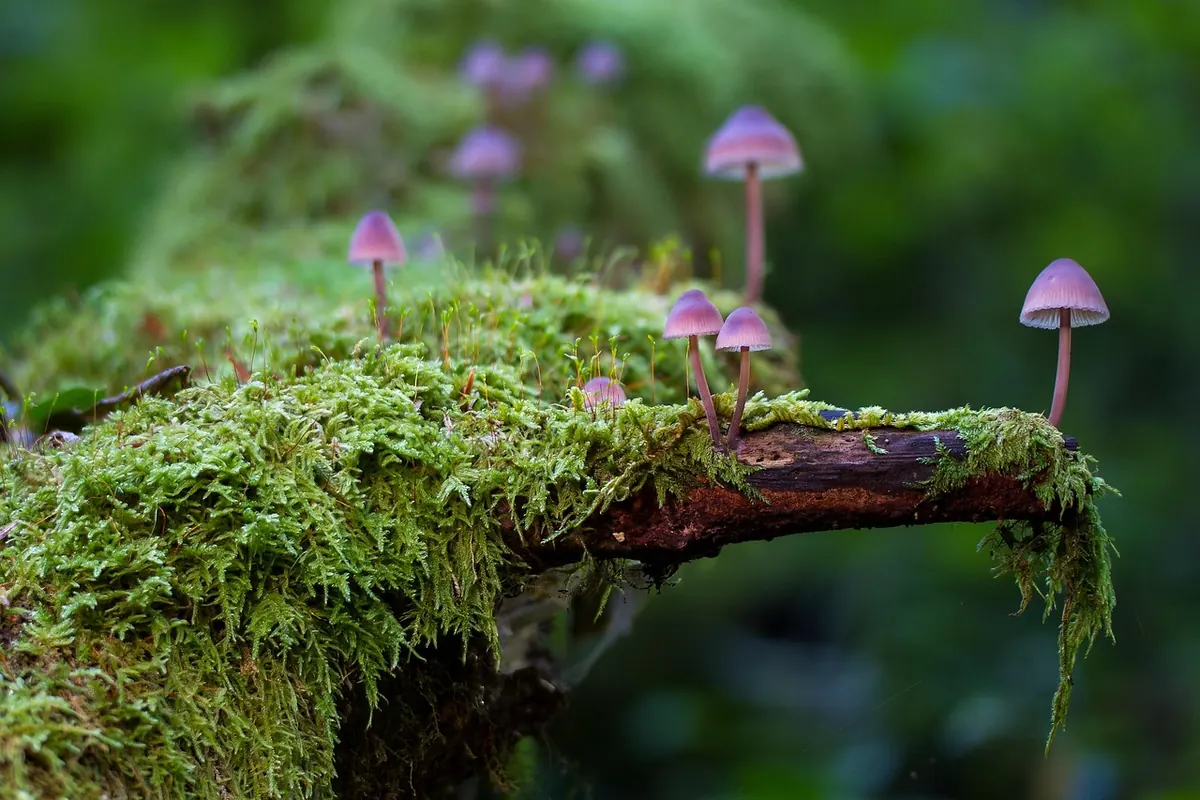
- Fungal fruiting bodies. Mushrooms, bracket fungi, and crusts on deadwood are signs of active decomposition. You do not need to identify them to note variety.
- Soft, crumbly wood. Pick up a piece of fallen wood. If it crumbles in your hand or feels spongy, decomposers are at work. Hard, dry logs are useful too, but a range of decay stages is better.
- A deep or spongy litter layer. Leaves, needles, twigs, and humus should build up in places, not be scraped bare. This layer protects roots and feeds soil life.
- Understory diversity. A mix of shrubs, ferns, grasses, and wildflowers, not a monoculture of one invasive or browse-resistant plant. Different heights and leaf shapes create cover.
- Regeneration in patches. Seedlings and saplings of native trees, especially in gaps where light reaches the floor. A forest with no young trees has a gap in its future.
- Mosses, lichens, and liverworts. These nonvascular plants often indicate clean air, steady moisture, and old surfaces. Lichens on branches and moss on rocks are good signs.
- Natural water features. Seeps, springs, small streams, or damp hollows that hold moisture. They support amphibians, insects, and plants that need consistent humidity.
- Bird activity across layers. Birds feeding and calling in the canopy, midstory, and shrub layer, not just one zone. Woodpeckers, nuthatches, thrushes, and warblers use different parts of the forest.
- Cavities and nesting signs. Holes in trunks, shredded bark, or old nests. These are evidence that the forest provides breeding habitat, not just cover.
- Insect signs. Chewed leaves, galls, tunneled bark, or scat. Some damage is normal. A forest with no insect activity is likely missing a food base.
- Animal trails and scat. Deer paths, fox scat, squirrel middens, or burrows. These show the forest is connected to a wider web of life.
- Age and size variety. A mix of young, mature, and old trees. Uniform plantations can be healthy for timber but usually support less wildlife than structurally complex stands.
- Resilient ground cover after disturbance. After wind, fire, or flooding, look for regrowth: fern fiddleheads, fireweed, or new shoots. Recovery is a sign of living soil and seed sources nearby.
What the Signs Mean Together
No single sign proves a forest is healthy. A woodland can have plenty of mushrooms but no regeneration; another may be full of birds in spring but bare in winter. The useful question is whether the pieces support one another. Deadwood, fungi, and insects form a slow food web. Understory plants and shrubs give birds nesting cover and foraging spots. Snags and cavities take decades to develop, so their presence hints at continuity. If you find seven or eight signs, that is a promising walk. If you find twelve or more, you are in a complex, functioning system. If you find only two or three, look closer at what is limiting the forest. Often it is deer browse, invasive plants, drainage, or a history of clearing.
How to Look Without Leaving a Mark
A field checklist should not become a collecting trip. Roll logs toward you, then roll them back. Do not peel bark from live trees or kick over every mushroom. Stay on trails where fragile plants grow. Keep your distance from nests and dens, especially in spring. If you carry a phone, use it for photos and notes rather than a flashlight that disturbs nocturnal wildlife. A hand lens, a notebook, and a small ruler are enough.
A Few Practical Habits
- Visit the same route in different seasons. Spring birds, summer flowers, autumn fungi, and winter tracks tell different parts of the story.
- Note the weather and recent rain. Fungi and amphibians appear after wet spells; bird activity shifts with migration.
- Sketch or photograph a fixed view. Repeat photos over years reveal tree growth, gap formation, and shrub change.
- Record what is missing as carefully as what is present. Absence is data.
- Leave deadwood where it lies. Moving it to tidy a site removes habitat.
Keep a Baseline, Not a Snapshot
The most useful forest record is not a single perfect day. It is a baseline you can revisit. Pick a short transect—a trail segment, a creek bank, a wooded slope—and walk it two or three times a year. Mark the start and end, then list which of the 15 signs you see. Over time, you will notice small shifts: a new snag, a spreading patch of invasive shrub, more seedling browse, a return of moss after a wet year. That is the real value of a checklist. It trains your eye, slows your pace, and turns a walk in the woods into a conversation with a place. If you are managing land or making decisions about cutting, spraying, or draining, use these observations as a starting point and seek advice from a local forester or conservation professional before acting.
Photo: adege / Pixabay