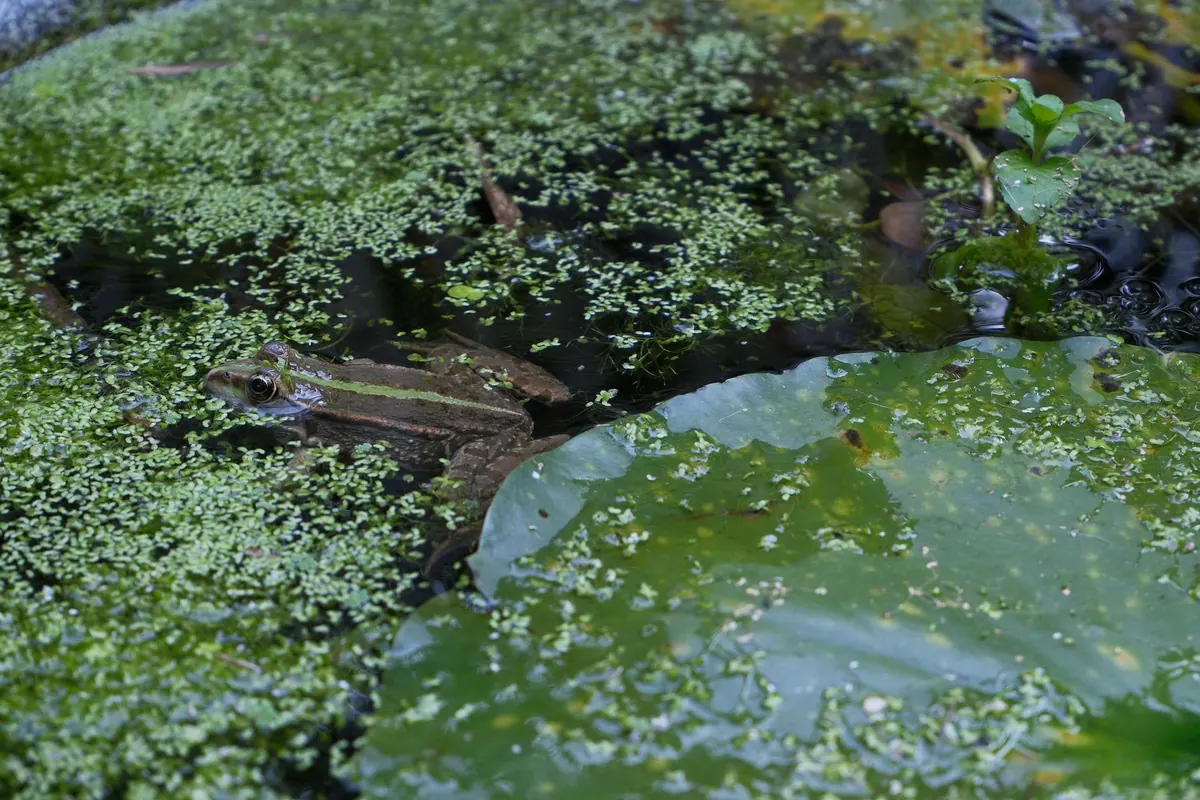
A pond is the most generous thing you can put in a garden. It gives more back, per square metre, than a border or a lawn ever will. Within a season of filling one, you may find damselflies hunting above it, blackbirds queuing at the edge to bathe, and a frog sitting in the damp shadow of a leaf like it has lived there for years. It doesn't need to be large. A hole a spade deep and two metres across, lined and planted, will do more for local wildlife than a whole shelf of feeders.
Choose a Spot That Works With the Garden
Aim for a place in sun for at least half the day. Sun warms the water and drives the whole food web, from algae to insects to the birds that come to eat them. A little afternoon shade is useful, though — it keeps the water from cooking in a hot spell and slows the algae that turns new ponds green.
Avoid the immediate shadow of big trees. Their roots are ruthless with liners, and a few weeks of falling leaves will fill a small pond faster than you can net them out. Keep the pond well away from house foundations, and stay out of hollows where water carrying fertiliser or weedkiller runs off the lawn. Site it where you will actually see it: outside a kitchen window, or beside a bench you use.
Before you dig, check for buried cables, pipes and drainage runs. If you have small children, plan for supervision from the start, and check whether your area has rules about ponds and fencing.
Decide on Size, Depth and Shape
Bigger ponds are easier to keep balanced, but small ones work well. A two-metre-wide pond is plenty. A buried half-barrel or an old sink will still bring in insects, and a frog will find it.
Depth matters more than width. Sixty centimetres at the deepest point gives frogs and newts somewhere to sit out a frost and lets the water stratify in summer. Colder climates call for deeper. Around that deep centre, dig at least one shelf at twenty to thirty centimetres for marginal plants, and slope one side gently, like a beach, so hedgehogs can walk down for a drink and climb back out.
Make the outline irregular. A wobbly oval or a kidney shape looks settled in the ground almost at once; a perfect circle looks installed. For the lining, butyl rubber gives the most freedom of shape. A rigid preformed shell is quick and tidy. Whichever you use, skip the fish. Goldfish and koi eat tadpoles, insect larvae and almost everything else you were hoping to attract.
Dig, Line and Fill
- Mark the outline with a length of rope or a garden hose, then cut and lift the turf. Stack it somewhere out of the way — it makes good edging later.
- Dig the shelves first, then work down to the deepest point. Check the levels with a straight plank laid across the hole and a tape measure dropped from it.
- Pick out sharp stones, glass and thick roots. Line the whole hole with a couple of centimetres of soft sand, then an old piece of carpet or underlay, fleece side up.
- Lay the liner in with generous slack so it can follow every curve. Weight the edges with stones or bricks and let it settle for an hour before filling.
- Fill slowly with rainwater from a butt if you have one. Tap water works too, but let it stand a few days before planting. Where chloramine is used in the supply it won't evaporate off, so a dechlorinator helps.
As the water rises, tuck and fold the liner into the corners. Trim it once the pond is full, leaving a good thirty-centimetre apron that you can hide under turf, gravel or flat stones.
Plant in Layers
Plants are the pond's lungs, shade and hiding places. Work in layers, and use native species where you can.
- Oxygenators: hornwort and water starwort live entirely underwater and compete with algae for nutrients.
- Marginals: water forget-me-not, marsh marigold, ragged robin and lesser spearwort grow at the shelf edge and give insects somewhere to land.
- Emergents: yellow flag iris and flowering rush add height and cover for emerging dragonflies.
- Floatings: a small water lily suits a larger pond; in a tiny one it will take over.
Plant into baskets of heavy loam soil, topped with gravel so the soil stays put. Never use potting compost — it feeds the algae, not the plants. Avoid vigorous non-natives such as parrot's feather and floating pennywort, which can escape a garden pond. Leave at least half the surface open water at first, and don't worry if it looks bare. It will fill.
Add the Details That Bring Wildlife In
The visitors arrive once access and shelter are right. Build a shallow ramp of stones or a roughened log from the water up to the bank, so anything that falls in can climb out. Lean a few more logs and stones in a sunny corner as a basking spot for frogs and newts.
Set one large flat stone at the water's edge for birds to bathe on, and let a stick trail into the water at the same place; insects use it as a ladder. Leave a patch of longer grass and a small pile of dead wood nearby. You don't need a pump or a fountain. Still water, no fish and no chemicals is the whole recipe.
Keep It Healthy Year-Round
A new pond often turns green, then cloudy, then clear as the plants and microscopic life find their balance. Give it a season before you intervene. If blanketweed or duckweed becomes a nuisance, net it out by hand or twirl it onto a stick — never reach for an algicide, which will wipe out the invertebrates along with the weed.
In autumn, net out most of the fallen leaves before they sink and rot, but leave a few in the deeper water. In winter, a plastic ball left floating helps keep a patch of water open for gas exchange, and it is kinder than breaking the ice with a spade, which sends shock waves through the pond. Every few years, in late spring, thin the plants by a third and scoop out a little silt. Never empty and scrub a pond clean; that destroys everything living in it.
Watching It Work
Expect the first arrivals within weeks: water boatmen rowing about, a dragonfly scouting the surface, bees drinking at the damp edge. Frogs usually take longer, and frogspawn may not appear until the second spring. Keep a notebook, resist the urge to tidy too much, and let the pond grow a little shaggy around the edges. That untidiness is where the life is.
Photo: Tess h. / Pexels